
Plenary
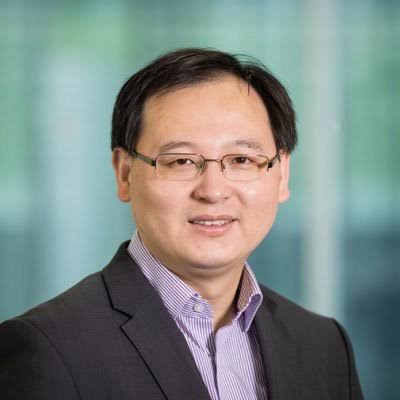
Prof Sir Konstantin Novoselov (Place Holder)
National University of Singapore (NUS)
2DMG-2027
Advancing nanoscale science, engineering and materials innovation for a sustainable future.
14–16
July 2027
The meeting
The World Congress on 2D Materials and Graphene, taking place from July 14–16, 2027, in Amsterdam, Netherlands, will bring together leading researchers, scientists, academicians, engineers, industry professionals, and students from around the world to explore the latest developments in two-dimensional materials and graphene technologies.
The conference will provide an international platform for presenting groundbreaking research, exchanging scientific knowledge, and fostering collaborations across academia and industry. Key topics will include graphene synthesis and characterization, advanced 2D materials, nanotechnology, next-generation electronics, energy storage, optoelectronics, flexible devices, and sustainable material innovations.
Through keynote presentations, plenary sessions, technical discussions, and networking opportunities, the congress aims to encourage interdisciplinary collaboration and accelerate the translation of scientific discoveries into practical applications. Join us in Amsterdam to share ideas, discover emerging technologies, and contribute to the future of 2D materials and graphene research.
Faculty
Plenary
National University of Singapore (NUS)

Keynote
The University of Texas at Austin
Stewards
Scientific Committee
Scientific Committee Member
Technische Universität Dresden

Scientific Committee
Honorary Professor
Poornaprajna Institute for Scientific Research, Bangalore
Programme
Day 1 – Graphene Science, 2D Materials & Fundamental Research. Foundational research on graphene synthesis, structure, interfaces, characterization, and physical properties.
Graphene Synthesis, Growth & Exfoliation
Methods for producing graphene via growth, exfoliation, and related scalable approaches.
Structural and Electronic Properties of Graphene
Atomic structure, band behavior, transport properties, and structure–property relationships.
Graphene Defects, Disorder & Functionalization
Defects, disorder, doping, chemical modification, and engineered functionality.
Surface Chemistry and Interface Engineering
Surface reactions, functional interfaces, adhesion, and chemical control at boundaries.
Graphene Characterization Techniques
Analytical methods for identifying quality, structure, composition, and performance.
Fundamental Physics of Graphene
Core physical phenomena, charge transport, quantum behavior, and theoretical insights.
Graphene–Substrate Interactions
Effects of substrates on graphene morphology, electronic behavior, and device performance.
Single-Layer and Few-Layer Graphene
Research on monolayer, bilayer, and few-layer graphene systems.
Day 1 session covering fabrication routes, growth mechanisms, processing methods, and analytical tools for 2D materials.
Chemical Vapor Deposition (CVD)
CVD processes for controlled growth of 2D materials.
Mechanical and Liquid-Phase Exfoliation
Top-down exfoliation techniques for producing layered nanosheets.
Molecular Beam Epitaxy
Epitaxial growth and atomic-scale control of 2D material films.
Physical Vapor Deposition
PVD methods for thin-film formation and layered materials processing.
Solution-Based Synthesis
Wet-chemical, colloidal, and solution-mediated synthesis pathways.
2D Material Growth Mechanisms
Nucleation, growth kinetics, grain evolution, and morphology control.
Advanced Microscopy and Spectroscopy
High-resolution imaging and spectroscopy for 2D material analysis.
Large-Area and Wafer-Scale 2D Materials
Scalable synthesis, uniformity, transfer, and wafer-scale integration.
Day 1 session highlighting the expanding family of layered and van der Waals materials beyond graphene.
Transition Metal Dichalcogenides (TMDs)
Synthesis, properties, and applications of TMD monolayers and multilayers.
MXenes
Carbide, nitride, and carbonitride 2D materials with tunable chemistry.
Hexagonal Boron Nitride
Insulating 2D boron nitride for interfaces, dielectrics, and heterostructures.
Black Phosphorus
Anisotropic 2D phosphorus materials and related device opportunities.
Transition Metal Oxides
2D oxide materials for electronic, catalytic, and functional applications.
2D Perovskites
Layered perovskites for optoelectronics, photovoltaics, and emerging devices.
2D Magnetic Materials
Atomically thin magnetic systems and magnetic phase control.
Topological 2D Materials
Topological phases, edge states, and quantum transport in 2D systems.
Emerging van der Waals Materials
Newly explored layered materials and heterostructure building blocks.
Day 1 session on stacked, assembled, and engineered interfaces for functional 2D material systems.
Van der Waals Heterostructures
Layered systems assembled through van der Waals interactions.
Graphene-Based Heterostructures
Graphene combined with complementary 2D and conventional materials.
2D/3D Heterostructures
Interfaces between atomically thin materials and bulk or thin-film materials.
Interfacial Charge Transfer
Charge redistribution, band alignment, and interlayer electronic coupling.
Moiré Superlattices
Twist-angle effects, moiré potentials, and emergent electronic states.
Defect and Interface Engineering
Designed defects and interfaces for improved properties and device function.
Layer-by-Layer Assembly
Sequential stacking, transfer, and assembly methods for tailored architectures.
Heterostructure-Based Functional Devices
Device concepts enabled by engineered heterostructures and interfaces.
Day 1 forum for students, postdoctoral researchers, and early-career investigators to present emerging work in graphene and 2D materials.
Emerging Researchers in Graphene
Early-career contributions in graphene science and engineering.
Novel 2D Materials
Student and early-career research on new 2D material systems.
Early-Career Innovations
Innovative concepts, methods, and applications from emerging researchers.
Student Research Presentations
Short research presentations by graduate and undergraduate participants.
Emerging Experimental Techniques
New experimental methods for synthesis, processing, and characterization.
Computational Studies of 2D Materials
Modeling, simulation, and theory-led research from young investigators.
Day 2 – Electronics, Energy & Advanced Applications. Device-focused session on graphene and 2D materials for electronic and nanoelectronic systems.
Graphene Field-Effect Transistors
Graphene-based FET architectures, performance, and integration challenges.
2D Semiconductor Devices
Transistors and circuits based on semiconducting 2D materials.
Nanoelectronic Devices
Nanoscale devices enabled by atomically thin materials.
Flexible and Stretchable Electronics
Bendable, wearable, and mechanically compliant electronic systems.
High-Frequency Electronics
RF, microwave, and high-speed devices using graphene and 2D materials.
Logic and Memory Devices
Logic elements, nonvolatile memory, and hybrid computing components.
Neuromorphic Electronics
2D material platforms for synaptic devices and brain-inspired computing.
Low-Power Electronics
Energy-efficient devices and low-voltage electronic architectures.
Integrated 2D Material Devices
Integration of 2D materials with device platforms and circuits.
Day 2 session covering light–matter interaction, photonic components, and optoelectronic devices using 2D materials.
Photodetectors
2D material photodetection across spectral ranges and device platforms.
Light-Emitting Devices
Emission mechanisms and device concepts using atomically thin materials.
Optical Modulators
Active modulation of light using graphene and 2D material properties.
Photovoltaics
2D materials for solar conversion and photovoltaic interfaces.
Terahertz Technologies
Terahertz generation, detection, modulation, and sensing applications.
Plasmonics
Plasmonic phenomena and nanophotonic control in 2D systems.
Nonlinear Optics
Nonlinear optical response and frequency conversion in 2D materials.
Integrated Photonics
2D materials integrated with waveguides, chips, and optical platforms.
2D Material–Photon Interactions
Fundamental and applied studies of excitons, photons, and optical coupling.
Day 2 session on energy storage, energy conversion, catalysis, and harvesting applications.
Lithium-Ion Batteries
Electrode, additive, and interface roles for graphene and 2D materials.
Sodium-Ion and Beyond-Lithium Batteries
2D material strategies for emerging battery chemistries.
Supercapacitors
High-surface-area electrodes and charge storage mechanisms.
Fuel Cells
Catalyst supports, membranes, and functional layers for fuel cell systems.
Hydrogen Production
2D catalysts and materials for hydrogen generation pathways.
Solar Energy Conversion
2D materials for solar absorption, charge transport, and device interfaces.
Photocatalytic Energy Conversion
Light-driven catalytic processes using graphene and 2D materials.
Energy Harvesting
Mechanical, thermal, optical, and hybrid energy harvesting concepts.
Electrocatalysis
Catalytic reactions and active-site engineering in 2D systems.
Energy Storage Materials
Materials design for batteries, capacitors, and hybrid storage platforms.
Day 2 session focused on composite design, multifunctional materials, coatings, and performance enhancement.
Polymer–Graphene Nanocomposites
Graphene-reinforced polymers and multifunctional polymer systems.
Metal–Graphene Composites
Metal matrix composites with graphene-enabled properties.
Ceramic–Graphene Composites
Ceramic composites enhanced by graphene and 2D additives.
Functional Nanocomposites
Composites designed for sensing, shielding, actuation, and advanced functions.
Conductive Composites
Electrical conductivity, percolation, and conductive networks in composites.
Lightweight Materials
Low-density materials with improved mechanical or functional performance.
Thermal Management Materials
Heat spreading, thermal interfaces, and thermally conductive composites.
Barrier and Protective Coatings
Corrosion, gas-barrier, wear-resistant, and environmental protective coatings.
High-Performance Composite Materials
Structural and multifunctional composites for demanding applications.
Day 2 forum on commercialization, manufacturing readiness, standards, and partnerships for graphene and 2D material technologies.
Industrial Graphene Applications
Real-world graphene uses across products, components, and systems.
Commercial 2D Material Technologies
Market-facing technologies based on 2D materials.
Advanced Manufacturing
Manufacturing methods for reliable production of graphene and 2D material products.
Scale-Up and Mass Production
Challenges and strategies for high-volume material and device production.
Graphene Quality and Standardization
Material quality, terminology, measurement, and standardization needs.
Technology Transfer
Moving discoveries from research settings into commercial deployment.
Intellectual Property
Patent strategy, licensing, and protection of graphene-related innovations.
Industrial Partnerships
Collaboration models between suppliers, manufacturers, researchers, and end users.
Commercialization Challenges
Barriers to adoption, cost, validation, and market entry.
Day 3 – Biomedical, Environmental & Future Technologies. Session on biomedical interfaces, diagnostics, therapeutic platforms, and healthcare devices.
Graphene-Based Biosensors
Graphene platforms for biological and chemical sensing.
2D Material-Based Diagnostics
Diagnostic assays, detection platforms, and point-of-care technologies.
Drug Delivery
2D material carriers and controlled delivery systems.
Tissue Engineering
Scaffolds, coatings, and bioactive materials for tissue support.
Regenerative Medicine
Materials approaches for repair, regeneration, and cell–material interactions.
Biomedical Imaging
Contrast, imaging probes, and multimodal imaging applications.
Antibacterial and Antiviral Materials
2D materials for antimicrobial surfaces and protective biomedical uses.
Medical Devices
Device concepts incorporating graphene and other 2D materials.
Biointerfaces
Cell, protein, and tissue interactions at 2D material surfaces.
Nanomedicine
Nanoscale therapeutic and diagnostic applications of 2D materials.
Day 3 session on water, air, remediation, green synthesis, and circular-economy uses of 2D materials.
Water Purification
Removal of contaminants using graphene and 2D material platforms.
Graphene-Based Membranes
Membrane technologies for filtration, separation, and selective transport.
Desalination Technologies
2D material membranes and interfaces for salt removal and water treatment.
Environmental Remediation
Materials for pollutant capture, degradation, and site remediation.
Air Purification
Adsorbents, filters, and reactive materials for air quality applications.
Environmental Sensors
Sensitive detection of pollutants, gases, and environmental markers.
Photocatalysis
Light-driven degradation and conversion processes for environmental benefit.
Sustainable 2D Materials
Lower-impact material design, production, and lifecycle considerations.
Green Synthesis
Environmentally conscious synthesis and processing methods.
Circular Economy and Resource Recovery
Recycling, reuse, and resource recovery approaches involving 2D materials.
Day 3 session addressing scalable production, printing, integration, process control, and quality assurance.
Large-Scale Graphene Production
High-volume graphene production pathways and process optimization.
Roll-to-Roll Manufacturing
Continuous manufacturing for films, coatings, and flexible devices.
Additive Manufacturing
3D printing and additive processes using graphene and 2D material inks.
Printing of 2D Materials
Ink formulation, deposition, patterning, and printed device fabrication.
Solution Processing
Dispersion, stabilization, coating, and solution-based fabrication methods.
Thin-Film Fabrication
Film formation, uniformity, transfer, and post-processing.
Device Integration
Integration of 2D materials into functional devices and systems.
Industrial-Scale Processing
Process design and production workflows for industrial deployment.
Quality Control and Standardization
Measurement protocols, reproducibility, and quality benchmarks.
Day 3 session on computational methods, data-driven discovery, modeling, and digital workflows for 2D materials.
Machine Learning for 2D Materials
ML models for property prediction, synthesis optimization, and discovery.
Computational Materials Design
Simulation-led design of graphene and 2D material systems.
Density Functional Theory (DFT)
First-principles calculations of electronic, structural, and energetic properties.
Molecular Dynamics
Atomistic simulations of dynamics, interfaces, and mechanical behavior.
Materials Informatics
Data infrastructure, descriptors, and analytics for materials research.
AI-Driven Materials Discovery
Autonomous and data-guided exploration of new materials and properties.
Multiscale Modeling
Linking atomistic, mesoscale, and continuum modeling approaches.
Digital Twins for Materials Engineering
Digital representations for process monitoring, prediction, and optimization.
Predictive Modeling of Material Properties
Computational prediction of mechanical, electronic, optical, and chemical properties.
Day 3 session exploring next-generation research directions, quantum effects, and future technology pathways.
Quantum Technologies
Graphene and 2D material opportunities in quantum-enabled systems.
2D Quantum Materials
Quantum phases, correlations, and emergent behavior in atomically thin systems.
Spintronics
Spin transport, spin injection, and magnetic functionality in 2D materials.
Valleytronics
Valley degree-of-freedom control and valley-based device concepts.
Moiré Physics
Moiré-driven phenomena in stacked and twisted 2D materials.
Twistronics
Twist-angle engineering for electronic and quantum properties.
2D Magnetism
Magnetic order, control, and device implications in 2D materials.
Topological Materials
Topological states and protected transport in two-dimensional systems.
Next-Generation Sensors
Advanced sensing platforms based on graphene and 2D material properties.
Future Nanoelectronics
Long-term directions for nanoscale and beyond-CMOS electronic technologies.
Day 3 panel discussion on translating graphene and 2D materials research into scalable, standards-aware, commercially viable technologies.
Academia–Industry Collaboration
Partnership models connecting universities, institutes, companies, and end users.
Technology Transfer
Pathways for licensing, validation, prototyping, and deployment.
Commercialization of 2D Materials
Market development, product readiness, and adoption strategies.
Scale-Up Challenges
Technical, economic, and operational barriers to production scaling.
Manufacturing Standards
Standards, specifications, and shared terminology for market confidence.
Intellectual Property & Patents
IP protection, patent positioning, and commercialization agreements.
Investment and Start-Up Opportunities
Funding pathways, venture formation, and investor readiness.
Global Research Collaboration
International research networks and collaborative development initiatives.
Future Directions for Graphene Technologies
Strategic outlook on research priorities and emerging technology opportunities.
Timetable
July 14, 2027
9:00 AM–9:20 AM
Day 1 Opening Ceremony & Welcome Address
Main Conference Hall (TBA)
9:20 AM–10:30 AM
Day 1 Plenary Session I: Graphene and 2D Materials – Advances, Challenges & Future Perspectives
Main Conference Hall (TBA)
10:30 AM–11:20 AM
Day 1 Keynote Session I: Fundamental Science of Graphene and Atomically Thin Materials
Main Conference Hall (TBA)
11:20 AM–11:40 AM
Day 1 Coffee Break & Technology Exhibition
Exhibition Area (TBA)
11:40 AM–1:00 PM
Day 1 Keynote Session II: Synthesis, Growth & Characterization of 2D Materials — Tracks: CVD Growth, Exfoliation, Epitaxial Growth, Defect Engineering, Surface Characterization
Main Conference Hall (TBA)
1:00 PM–2:00 PM
Day 1 Networking Lunch
Dining Area (TBA)
2:00 PM–3:00 PM
Day 1 Invited Session I: Beyond Graphene – Transition Metal Dichalcogenides & Emerging 2D Materials — Tracks: MoS₂, WS₂, MoSe₂, WSe₂, MXenes, Hexagonal Boron Nitride
Main Conference Hall (TBA)
3:00 PM–4:00 PM
Day 1 Young Researchers Forum: Emerging Research in Graphene & 2D Materials
Main Conference Hall (TBA)
4:00 PM–4:20 PM
Day 1 Coffee Break
Exhibition Area (TBA)
4:20 PM–5:00 PM
Day 1 Special Session: Defects, Interfaces, Heterostructures & Properties of 2D Materials
Main Conference Hall (TBA)
July 15, 2027
9:00 AM–10:00 AM
Day 2 Plenary Session II: Graphene and 2D Materials for Next-Generation Technologies
Main Conference Hall (TBA)
10:00 AM–11:00 AM
Day 2 Keynote Session III: 2D Materials for Electronics, Optoelectronics & Nanoelectronics — Tracks: Transistors, Flexible Electronics, Photodetectors, Sensors, Nanoelectronic Devices
Main Conference Hall (TBA)
11:00 AM–11:20 AM
Day 2 Coffee Break & Technology Exhibition
Exhibition Area (TBA)
11:20 AM–1:00 PM
Day 2 Keynote Session IV: Graphene & 2D Materials for Energy Storage and Conversion — Tracks: Batteries, Supercapacitors, Fuel Cells, Solar Cells, Hydrogen Production
Main Conference Hall (TBA)
1:00 PM–2:00 PM
Day 2 Networking Lunch
Dining Area (TBA)
2:00 PM–3:00 PM
Day 2 Invited Session II: Graphene-Based Nanocomposites, Functional Materials & Advanced Coatings
Main Conference Hall (TBA)
3:00 PM–4:00 PM
Day 2 Industry & Technology Forum: Commercial Applications of Graphene and 2D Materials — Tracks: Advanced Manufacturing, Coatings, Composites, Electronics, Energy & Industrial Applications
Main Conference Hall (TBA)
4:00 PM–4:20 PM
Day 2 Coffee Break
Exhibition Area (TBA)
4:20 PM–5:00 PM
Day 2 Poster Presentations & Flash Talks: Emerging Innovations in 2D Materials
Poster Area (TBA)
July 16, 2027
9:00 AM–10:00 AM
Day 3 Plenary Session III: Emerging Applications of Graphene and 2D Materials in Science & Engineering
Main Conference Hall (TBA)
10:00 AM–11:00 AM
Day 3 Invited Session III: Graphene & 2D Materials for Biomedical and Healthcare Applications — Tracks: Biosensors, Drug Delivery, Tissue Engineering, Biomedical Imaging, Diagnostics
Main Conference Hall (TBA)
11:00 AM–11:20 AM
Day 3 Coffee Break
Exhibition Area (TBA)
11:20 AM–1:00 PM
Day 3 Invited Session IV: Environmental Applications, Water Treatment & Sustainable 2D Materials — Tracks: Water Purification, Membrane Technologies, Environmental Sensors, Photocatalysis, Sustainable
Main Conference Hall (TBA)
1:00 PM–2:00 PM
Day 3 Networking Lunch
Dining Area (TBA)
2:00 PM–3:00 PM
Day 3 Keynote Session V: Graphene Composites, Advanced Manufacturing & Scalable Processing
Main Conference Hall (TBA)
3:00 PM–4:00 PM
Day 3 Special Session: AI, Computational Materials Science & Future Directions in 2D Materials
Main Conference Hall (TBA)
4:00 PM–4:20 PM
Day 3 Coffee Break
Exhibition Area (TBA)
4:20 PM–5:00 PM
Day 3 Closing Ceremony, Best Presentation Awards & Conference Valedictory
Main Conference Hall (TBA)

Dates
With us
Audience
Researchers & Scientists
Professors & Academics
Materials Scientists
Nanotechnology Researchers
Graphene Researchers
Laboratory Equipment Suppliers
Advanced Manufacturing Firms
Energy & Sustainability Companies
Renewable Energy Technology Companies
Graphene Production & Processing Companies
Aerospace & Advanced Engineering Firms
Biomedical & Healthcare Technology Companies
Research Laboratories
Universities & Academic Institutions
Nanoelectronics & Device Manufacturers
Chemical & Materials Industries
Scientific Publishers
Engineering & Technology Consulting Firms
Bulletin
October 20, 2026
The 2DMG-2027 news page is now available for event announcements, reminders, and programme updates.
October 20, 2026
A placeholder announcement for upcoming updates on the scientific programme, registration, and venue details.
October 20, 2026
A short draft news item inviting visitors to check back for future event announcements.
Registration
Early bird
$679$779
Early bird
$799$899
Early bird
$449$499
Early bird
$349$399
Questions
The World Congress on 2D Materials and Graphene (2DMG-2027) is scheduled for 2027-07-14 to 2027-07-16 in Amsterdam, Netherlands. The exact venue address is currently to be announced by the organizing team.
Visit
Amsterdam pairs world-class research and business infrastructure with canals, museums, neighbourhood markets and easy public transport. Use these editable highlights to introduce delegates to the city around the conference venue.
Amsterdam is well connected by international rail, Schiphol Airport and the city’s tram, metro, bus and ferry network. Delegates should check live travel planners before travelling.
The hotels below are editable suggestions near the assumed conference area at RAI Amsterdam. Rates, availability and booking conditions should be confirmed directly with each hotel.